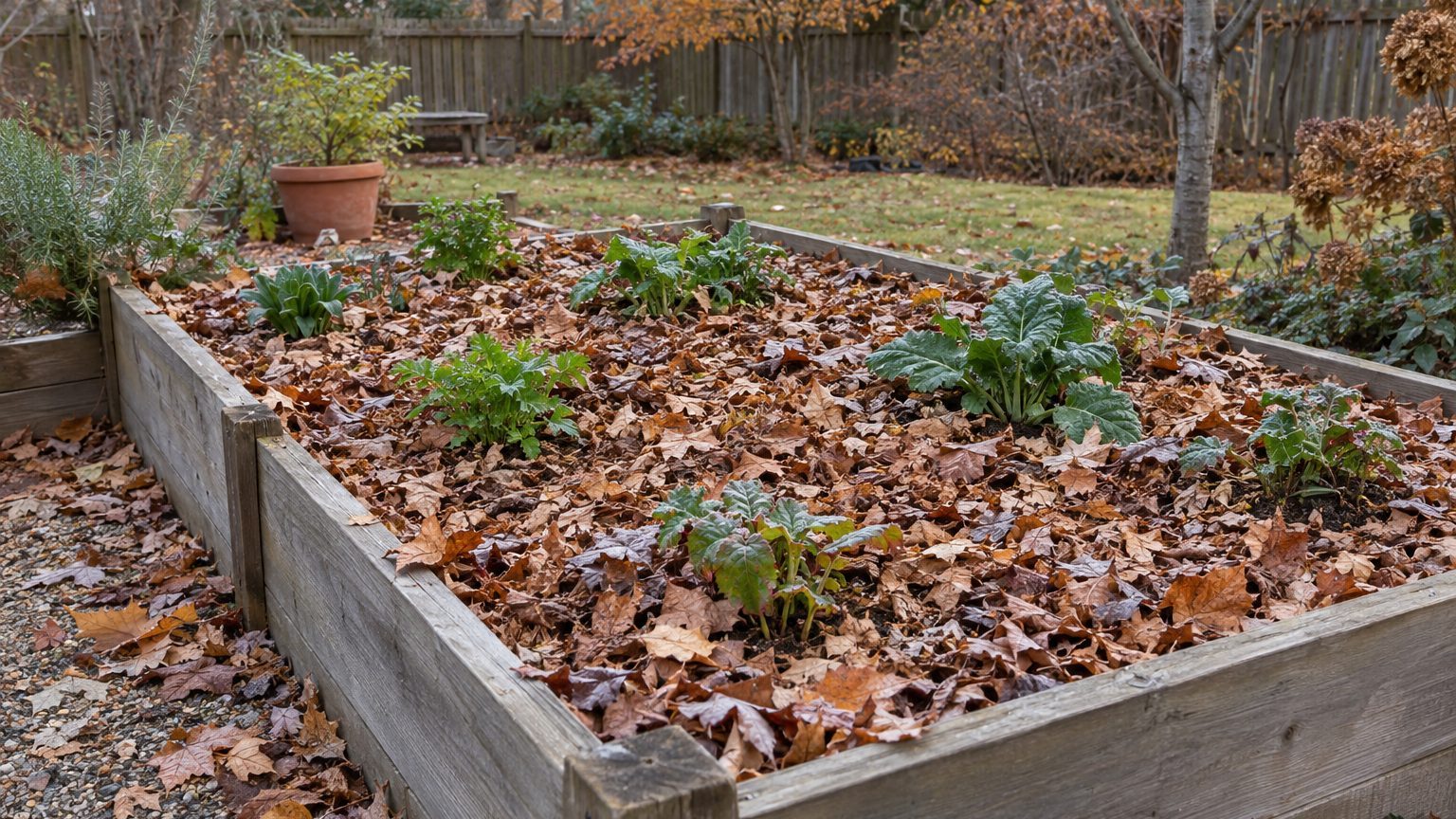
Yes, in most cases you can leave leaves on a garden bed over winter. Spread 2 to 4 inches of shredded or chopped leaves, or a looser 3 to 6 inches of whole leaves, and keep them 2 to 4 inches away from stems and plant crowns. The layer insulates the soil, holds moisture, feeds soil life and suppresses early weeds. Rake it off or thin it only if the foliage is diseased, packed into a wet mat, or sheltering rodents that chew your plants. In spring, pull the layer back from emerging plants once the soil warms and the worst freezes have passed.
Using leaves in garden beds
Bare winter soil takes a beating from pounding rain, freeze-thaw cycles and drying wind. A leaf layer copies the forest floor.
In natural settings, fallen leaves form a carpet over the soil that conserves moisture, modifies temperatures, and prevents erosion and crusting.
Underneath,
leaves also serve as food for earthworms
, which pull the material down slowly.
A 2-inch layer of shredded fall leaves turns into a soft brown mulch by spring, reducing weeds and helping hold soil moisture.
The same idea underlies the broader case for leaves in garden beds.
Timing counts. Mulch once the ground has started to freeze, not during a warm spell.
Applying thick winter protection too early can encourage growth beneath the mulch.
Form matters as much as depth.
Shredded leaves break down faster and are less likely to blow away.
Whole leaves tend to pack into a wet mat, while shredded leaves stay loose enough for air and water to pass through.
Maple, sycamore and big oak leaves are among the worst offenders. A pass or two with a mower usually helps. The trade-off:
shredding can destroy insects that use leaf litter for cover or incubation
, so consider keeping a patch of whole leaves in a back corner.
Leaves as mulch in vegetable garden
Start with cleanup. Pull spent crops and any plants with disease, then wait for cold ground before mulching empty beds with 2 to 4 inches of shredded leaves. Some extension guides go further.
Colorado State suggests six to eight inches of leaves, ideally shredded or chopped, added to a vegetable garden yearly, either as fall mulch incorporated in spring or turned in during fall.
The fuller treatment is in our guide to leaf mulch for vegetable beds.
Garlic is the classic overwintering crop for leaves. It goes in about one to two weeks after the first killing frost, with cloves
two to three inches below the surface
. University of Minnesota Extension recommends
three to four inches of leaf or straw mulch to prevent fluctuating temperatures during the winter and early spring.
Iowa State goes to 4 to 6 inches in colder conditions.
In the South, University of Georgia Extension suggests 2 to 3 inches after the garlic has come up, kept 2 to 3 inches back from the stems
, mainly for weeds and moisture rather than cold.
Kale, spinach and carrots need a lighter touch.
Leaves placed around the base of root crops and hardy vegetables can offer freezing protection in late fall.
Tuck shredded leaves between plants and keep them off the crowns.
Come spring, resist the urge to dig the leaves in.
Nitrogen tie-up, where microbes use up soil nitrogen to break down organic matter, is only a problem if you mix the leaves into the soil.
Left on the surface, they decompose gradually. Rake the layer aside, plant, then slide it back around seedlings as mulch.
How to make leaf mold for garden
A fall yard can produce more leaves than any bed wants. Beyond the depths suggested below, extra leaves stop helping and start smothering, so send the overflow to a pile or wire bin. Leaf mold is simply leaves left to rot slowly.
Shredded leaves can be ready in roughly six months to a year; whole leaves often take a year or two, sometimes longer.
Keep the pile damp, because
keeping the soil moist will speed decomposition
, and the same holds for a pile.
Finished leaf mold makes a fine spring top-dressing for vegetable beds. A thin scatter over the soil, or around transplants, adds organic matter without the nitrogen question.
Should you leave leaves on a garden bed over winter?
Usually yes. Run through this checklist for each bed:
- Leave: healthy leaves, no disease history, no vole trouble, shredded or loosely layered.
- Thin: whole leaves packed down or deeper than 6 inches, wet clumps, or shade that keeps everything soggy.
- Clear: any bed where tomatoes, roses or squash had disease, or where voles have tunneled before.
Disease is a major reason to rake.
Powdery mildews, rose black spot and tomato early blight can overwinter in dead and decaying leaves and stems.
All the common tomato leaf diseases overwinter in the vegetable garden on infected plant debris.
Colorado State advises
disposing of the debris in municipal trash or by burial.
Rodents are another reason: if voles chewed plants last winter, thin the layer.
How deep should leaves be on a garden bed in winter?
Match depth to leaf form. Shredded or mower-chopped leaves can go 2 to 4 inches deep. Whole leaves need to be looser and fluffier (a loose 3 to 6 inches at most), and caution applies:
thicker layers of whole leaves can block water and oxygen as they break down and compact.
Leave a gap of 2 to 4 inches around stems and crowns.
One extension source recommends keeping mulch a good four inches away from stems and trunks to prevent rot.
| Bed or situation | Leaf form | Suggested depth | What to avoid | Spring action |
|---|---|---|---|---|
| Empty vegetable bed | Shredded or chopped; whole only if loose | 2 to 4 inches (extension guides allow 6 to 8 inches of chopped leaves if you plan to incorporate) | Digging fresh leaves in | Rake aside to plant, then use as mulch |
| Bed with overwintered garlic or kale | Shredded or chopped | 3 to 4 inches for garlic; up to 4 to 6 in the coldest areas | Mulching before the ground cools; leaves on crowns | Thin gradually as shoots push up |
| Perennial bed | Shredded; whole if fluffy | 2 to 4 inches shredded; University of Minnesota allows 5 to 6 inches for perennial and bulb beds once soil begins freezing | Piling against crowns | Pull back from new growth |
Raised-bed specifics are in leaves in raised beds, and perennial and bulb details in leaves in flower beds over winter.
When do you remove leaves from a garden bed in spring?
Go by the weather and the plants, not the calendar.
Penn State Extension recommends gradually removing winter protection rather than stripping it all away at once.
Iowa State suggests removing perennial-bed mulch in late March or early April in southern Iowa, and early to mid-April in the north.
University of Missouri Extension advises holding off on cleanup until temperatures are consistently above 50 degrees Fahrenheit.
That figure is a starting point, not a rule.
Watch for three signals: soil that has thawed and drains, pale new shoots poking through the leaves, and a forecast without hard freezes. In USDA zones 3 to 5, that usually means April or even May, with leaves ready to rake back over shoots if frost returns. In zones 7 to 9, the pullback can come weeks earlier, and thin leaf cover can stay all year.
Pull back, don’t haul away.
Rake the material into the aisles, and lightly rake it back over plants if a frost threatens.
Discard anything
slimy, sour-smelling, or diseased.
Do leaves on garden beds cause slugs, rot or rodents?
Not by themselves, but thick, undisturbed layers give pests what they want. Practical guidance agrees that
a thick, dry, fluffy mulch laid down in mild weather is close to ideal mouse and vole habitat
, and
warm, damp hideouts suit slugs and pill bugs.
Fixes:
- Matted leaves: break up the mat with a fork, mix in shredded leaves, or remove the clumps.
- Slugs: pull the layer back in early spring so the soil surface dries, and set aside seedling rows.
- Voles:
pull mulch back three to six inches from the base of trees and shrubs
, mulch after cold sets in, and mow tall grass nearby.
One nuance:
voles don’t hibernate
, so check garlic and bulb beds in late winter for runways.
Frequently Asked Questions
Can I leave maple leaves whole on a garden bed?
Only in a thin layer. Maple leaves mat when wet, and
a thick or compacted layer of whole leaves can block air and water.
Run a mower over them first or mix them with other leaves.
Do I need to add fertilizer when I cover a bed with leaves?
Generally no. Surface leaves
don’t tie up nitrogen; that happens only when they’re incorporated into the soil.
If you plan to dig them in, expect a temporary dip. A soil test is the reliable way to know what a bed needs.
Can I put diseased leaves on my garden bed?
No. Rake them up and bin or bury them.
A compost pile has to reach at least 140°F to kill most pathogens, a temperature many backyard piles do not reach.
Will leaves on garden beds make the soil acidic?
No.
Because of natural soil buffering and breakdown, leaf mulch has no significant effect on soil pH.
Can I cover plants completely with leaves for winter?
Not living crops or evergreen plants, which need light and air. For dormant tender perennials,
wait until temperatures have dropped well below freezing, then mound shredded leaves over the crowns.
Remove the mound gradually in spring.
Sources: cmg.extension.colostate.edu | dep.nj.gov | extension.iastate.edu